
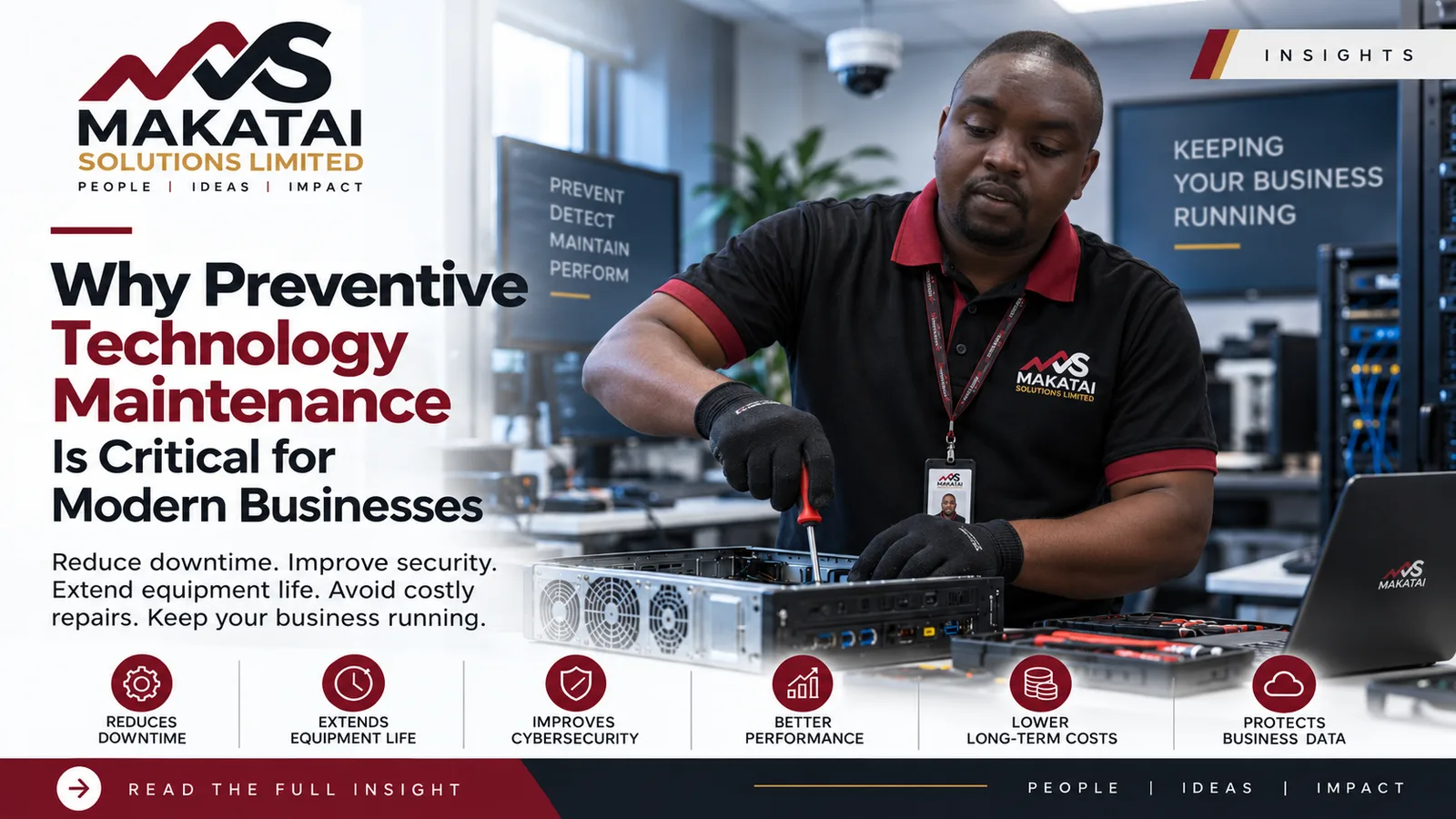
Regular technology maintenance helps businesses reduce downtime, improve security, extend equipment life, and avoid costly emergency repairs. A proactive maintenance strategy can keep critical systems running reliably while supporting business growth.
Technology has become essential to almost every business operation. From computers and networks to CCTV systems, access control, servers, printers, communication systems, and business software, organizations depend on reliable technology every day.
However, many businesses only think about maintenance after something has already failed. This reactive approach can lead to unexpected downtime, lost productivity, expensive repairs, and poor customer experience.
At MAKATAI Solutions Limited, we believe preventive maintenance is one of the most effective ways to protect technology investments and ensure business continuity.
1. Reduce Unexpected Downtime
Unexpected system failures can interrupt important business activities.
Preventive maintenance helps identify problems before they become major failures. Regular inspections, updates, cleaning, testing, and performance monitoring can significantly reduce the chances of sudden equipment breakdown.
2. Extend the Life of Equipment
Technology equipment represents a significant investment.
Computers, networking equipment, servers, CCTV systems, printers, and other devices can last longer when they are properly maintained.
Routine maintenance helps prevent overheating, component damage, software problems, and unnecessary wear.
3. Improve Cybersecurity
Technology maintenance is not only about hardware.
Software updates, security patches, antivirus updates, access reviews, password policies, backups, and network monitoring are important components of a strong maintenance strategy.
Keeping systems updated reduces exposure to known security vulnerabilities.
4. Improve System Performance
Slow computers, unstable networks, outdated software, and poorly configured systems can reduce employee productivity.
Regular maintenance allows businesses to identify performance problems and optimize systems before they affect daily operations.
5. Reduce Long-Term Costs
Emergency repairs are often more expensive than scheduled maintenance.
A preventive maintenance plan allows organizations to detect smaller problems early and plan repairs or equipment replacement before a complete failure occurs.
This makes technology costs more predictable.
6. Protect Business Data
Business data is one of an organization's most valuable assets.
Regular backup verification, storage monitoring, system updates, and disaster recovery testing help ensure that important information can be recovered when necessary.